











Restaurant capacity planning for reservations is the process of deciding how many guests you can confidently accept, where they can sit and when they can be served. It is not simply a count of every chair in the venue. A useful availability plan reflects the tables you can use, the areas that are open, the service period in question and the bookings already on the books.
For an independent restaurant or small dining venue, this review creates a more reliable starting point for online and direct reservations. It helps avoid accepting bookings that cannot be seated comfortably, while making the available space easier to understand at a glance. The aim is practical: take bookings that fit the service you are preparing to run.
Start with the areas you actually use
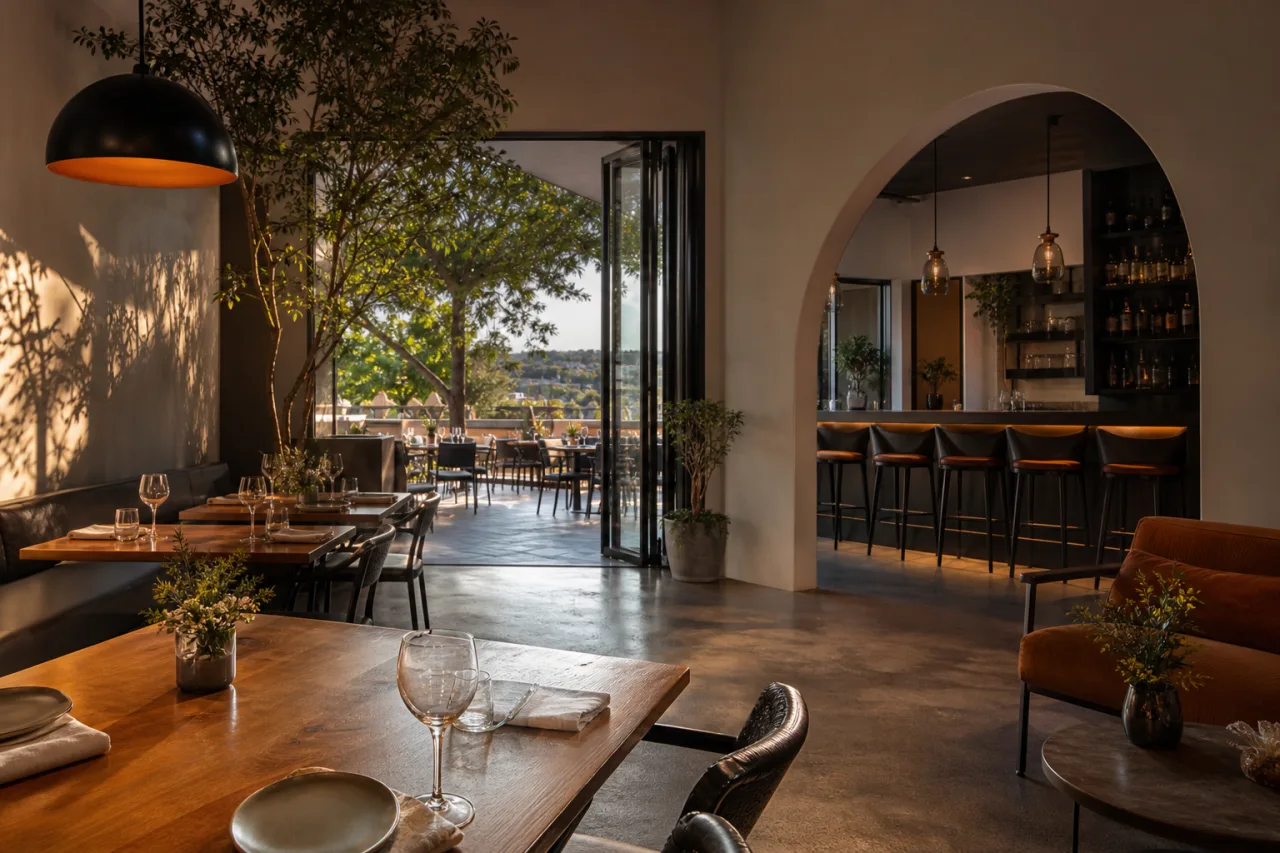
Begin by listing the guest areas that may be available for reservations. These might include the main dining room, a terrace, a bar area or another distinct section of the venue. An area should be treated as its own part of the plan because it may have different tables, different suitability for guests and different availability at different times.
For each area, review the tables that belong there. Record the number of seats at each table and consider how that table is normally used. A two-person table, for example, contributes differently to your plan than a table intended for four guests. The question is not only how many seats exist in total, but how those seats are arranged into bookable tables.
Count tables, not only chairs
A single total seat figure can look reassuring while hiding a difficult service. If a restaurant has many seats but they are spread across tables of different sizes, a run of small or large parties may leave awkward gaps. Reviewing individual tables makes those gaps visible before reservations are accepted.
- Identify every table in each guest area.
- Note the usual number of guests each table can accommodate.
- Keep tables associated with the correct area.
- Consider whether a table is appropriate for all party sizes or only certain ones.
- Exclude any table or area that will not be available for the relevant service.
This table-level view gives restaurant booking capacity a firmer foundation. It lets you see whether an incoming party has a natural place to sit rather than assuming that spare seats anywhere in the venue are interchangeable.
Set capacity separately for each service period
Availability should be reviewed by service period. Lunch and dinner are separate opportunities to serve guests, but they do not necessarily have the same open areas, table setup or booking capacity. Treating the entire day as one pool of availability can lead to an unrealistic plan.
Define the service periods you intend to take bookings for, then review the areas and tables available in each one. A dining room may be usable throughout the day while another area is only open for a particular service. Likewise, a table arrangement that works at lunch may not be the arrangement you plan to use later.
Make the plan match the service
For every service period, ask a short set of operational questions before opening availability:
- Which areas will be open to guests?
- Which tables will be available in those areas?
- What party sizes can those tables reasonably receive?
- How many reservations can be accepted without relying on space that is not part of the plan?
Answering these questions service by service keeps restaurant table availability connected to the reality of the day. It also makes it easier to explain the plan to anyone handling incoming bookings, because the available tables and areas are clear rather than assumed.
Review current reservations before adding more
Capacity planning is not a one-time calculation. Once bookings begin to arrive, current reservations become part of the picture. Before accepting more guests, review who is already expected, the party sizes involved, the service period they are booked into and the areas or tables they will use.
This is where a clear overview is especially valuable. You need to distinguish between total space and remaining usable space. A venue may have seats left in theory, but no suitable table left for the party requesting a reservation. Conversely, a close look at the table plan may show that there is a sensible space for a booking that a headline seat count would not reveal.
A reservation workspace that brings bookings, services, tables and areas together can make this review more straightforward. Restaurant reservations is designed to help small venues receive online bookings, control availability for every service and organise tables, areas and the waiting list from one clear view.
Use a simple pre-booking check
When a new request arrives, avoid deciding from memory alone. Check the relevant service period, then look at the existing reservations against the open tables and areas. Confirm that the party can be placed in a way that still makes sense for the remainder of the service.
- Check the requested service period first.
- Check the party size against the tables still available.
- Check whether the appropriate area is open.
- Check how the booking affects the remaining table mix.
- Accept the reservation only when it fits the plan you have set.
This approach is more useful than treating every unoccupied seat as automatically bookable. It protects the table arrangement you need to deliver an orderly service and gives staff a consistent basis for making booking decisions.
Decide whether to protect room for walk-ins
Not every restaurant should offer every table to advance reservations. If walk-in guests are an important part of your service, leaving some capacity unbooked can be a deliberate planning choice. The right amount depends on how you want the service to operate, but the key is to decide intentionally rather than discovering too late that every table has been committed.
Protecting capacity for walk-ins does not mean ignoring reservations. It means setting a boundary between the tables you are prepared to reserve in advance and the space you want to retain for guests who arrive without a booking. That boundary can be considered separately for each area and service period.
For example, you may decide that a particular section is best kept flexible during a service, while another area is suitable for planned reservations. The important point is that the availability shown to guests reflects that decision. Do not publish capacity that you would prefer to hold back.
Reliable availability is not the highest possible booking total. It is the number of reservations that fits the tables, areas and service you intend to run.
Update availability when operations change
A capacity plan remains useful only when it reflects current operations. Changes to an area, table setup or planned service should lead to a fresh review of availability. If an area will not be used, remove it from the capacity you are offering. If table arrangements change, revisit the party sizes you can accommodate and the reservations that still fit naturally.
Make this review part of the routine before bookings are opened for a service. It is also worth revisiting whenever the team changes how it plans to use the venue. Small adjustments can have a meaningful effect on restaurant booking capacity, particularly in a small space where each table matters.
Using a single place to organise services, tables and areas makes these updates easier to carry through into the booking process. With Restaurant reservations, you can manage restaurant bookings and table availability while keeping services, areas and a waiting list in view.
Build a repeatable availability routine
The strongest restaurant capacity planning for reservations is usually a repeatable routine rather than a complicated formula. Before each service, review the areas you will open, the tables available within them, the reservations already accepted and any capacity you want to reserve for walk-ins. Then set availability to match that plan.
As requests arrive, check them against the remaining table mix instead of relying on a broad seat total. When operations change, update the plan before more bookings are taken. This creates a calmer, clearer process for both guests and staff.
Conclusion

Realistic availability begins with the details: tables, areas, service periods and current reservations. By reviewing them together, you can accept bookings with more confidence and avoid offering space that does not truly fit the service. Explore Restaurant reservations to control availability across services and areas from a clear workspace.