











Restaurant reservation turn time planning is the practical work of deciding how long a table should be held for each booking. It sounds simple, but a slot that looks generous on a booking screen can be too short once guests are seated, orders are taken, food is served and the bill is settled. When this happens repeatedly, the pressure does not stay on the screen: it lands on guests, the front-of-house team and the next reservations waiting to arrive.
For independent restaurants, realistic booking slots are a way to protect the service you want to provide while making better use of the tables you already have. The goal is not to make every booking identical. It is to set availability around how your restaurant actually operates, then review it before guests can reserve a table.
Why unrealistic turn times create pressure later

A short table turn time can make more reservations appear possible. Yet if the assumed turnover does not match a real service, the apparent availability is misleading. A table may still be occupied when the next party arrives, or the team may feel pushed to clear, reset and seat tables faster than the service allows.
Longer slots are not automatically the answer either. If every booking receives more time than it usually needs, tables can be held back unnecessarily. The most useful plan is based on a reasonable view of each service: when guests arrive, how long they tend to stay, and when the table can genuinely be ready again.
Good restaurant service timing helps the whole operation work from the same expectation. The front-of-house team can see what is due to arrive. Guests receive booking options that reflect the restaurant’s capacity. Owners and managers can assess whether availability is aligned with the tables and areas available for that service.
A booking slot should represent a table’s full journey: arrival, the meal, payment, departure and preparation for the next guests.
Start with the service pattern, not a generic duration
There is no single correct restaurant booking slot duration. A restaurant’s own operating pattern is the best starting point. Look at services separately rather than assuming that lunch, dinner and every day of the week should use the same timing.
Consider party size
Party size can change how a table is used. A smaller party may occupy a table differently from a larger booking, and a larger party can affect the timing of seating, ordering and the overall meal. Review the party sizes that are common in your bookings and consider whether a single duration gives a realistic picture for all of them.
This does not mean creating unnecessary complexity. It means avoiding an assumption that every reservation has the same effect on availability. Where party sizes regularly vary, table availability should still reflect which tables can accommodate each booking and how that affects the next possible reservation.
Consider service style
Your service style shapes the pace of every booking. A quick daytime service may have a different rhythm from an evening service. A restaurant that expects guests to settle into a longer meal should not publish booking slots based on a faster pattern simply because that creates more apparent openings.
Think through the usual sequence from the guest’s perspective. When do bookings tend to arrive? How does the service progress? At what point is a table normally free? Build slots around that sequence, rather than around an idealised timetable that depends on every table turning at exactly the same moment.
Consider table layout and areas
Table turn time for reservations is also a capacity question. Tables are not always interchangeable. Their size, position and the area they belong to can determine which parties they suit and which reservations can be accepted at the same time.
Review the layout used for each service before setting public availability. A plan that works on paper may fail if several bookings all depend on the same limited group of suitable tables. By organising areas and table availability clearly, you can see whether the timing you intend to publish matches the physical setup of the restaurant.
For a practical starting point, organise restaurant tables and areas in one clear reservations view. Seeing services, tables and availability together makes it easier to check the operational effect of each booking slot.
Build booking slots around actual operating patterns
Once you have reviewed party size, service style and layout, turn those observations into a simple service plan. Start with the times when you genuinely want to accept reservations, then assess what each booking means for a table’s availability afterwards.
- List each service separately. Identify the services you offer and the booking times that belong to each one. Treat them as distinct operating periods when their patterns differ.
- Review the tables and areas used in that service. Check which tables are available, what party sizes they can support and whether some areas follow a different pattern.
- Set a realistic duration for the booking. Include the full period a table is likely to be occupied, rather than only the time spent eating.
- Check the next booking opportunity. Ask whether the table can truly be ready for another reservation at the following slot.
- Publish availability only after the plan works. A visible slot is a commitment to guests, so it should be supported by the service plan behind it.
This approach keeps restaurant reservation turn time planning grounded in the way the restaurant runs. It also gives managers a useful basis for discussing changes with the team. If a slot is consistently difficult to deliver, review the schedule rather than treating the problem as a one-off during service.
Review availability before opening bookings
Before making booking slots available online, carry out a final availability review. This is the point to compare the proposed reservation times with the tables, areas and service you have planned. Look for overlaps that would leave the team without an appropriate table for an arriving party.
Focus on the busiest parts of a service, not only the first booking of the day. Several reservations can look acceptable individually but create a conflict when they are considered together. Check whether the planned timing leaves enough usable table availability for the parties you expect to accept.
A clear reservations workspace can make this review easier. Restaurant reservations helps restaurants receive online bookings, control availability for every service and organise tables, areas and the waiting list without scattered calls and notes. Used as part of a regular planning routine, it gives you one place to review what is available before opening slots to guests.
Make reviewing part of the routine
Turn times should be reviewed as operating patterns change. A new service pattern, a different use of an area or a shift in the types of parties you receive can all affect whether the current booking plan remains realistic. Regular reviews help keep published availability connected to the service the team can deliver.
Keep the review practical. Look at the service, table setup and booking times together. If the plan no longer reflects how tables are being used, adjust availability before it creates avoidable pressure during a busy service.
A realistic booking plan supports better service
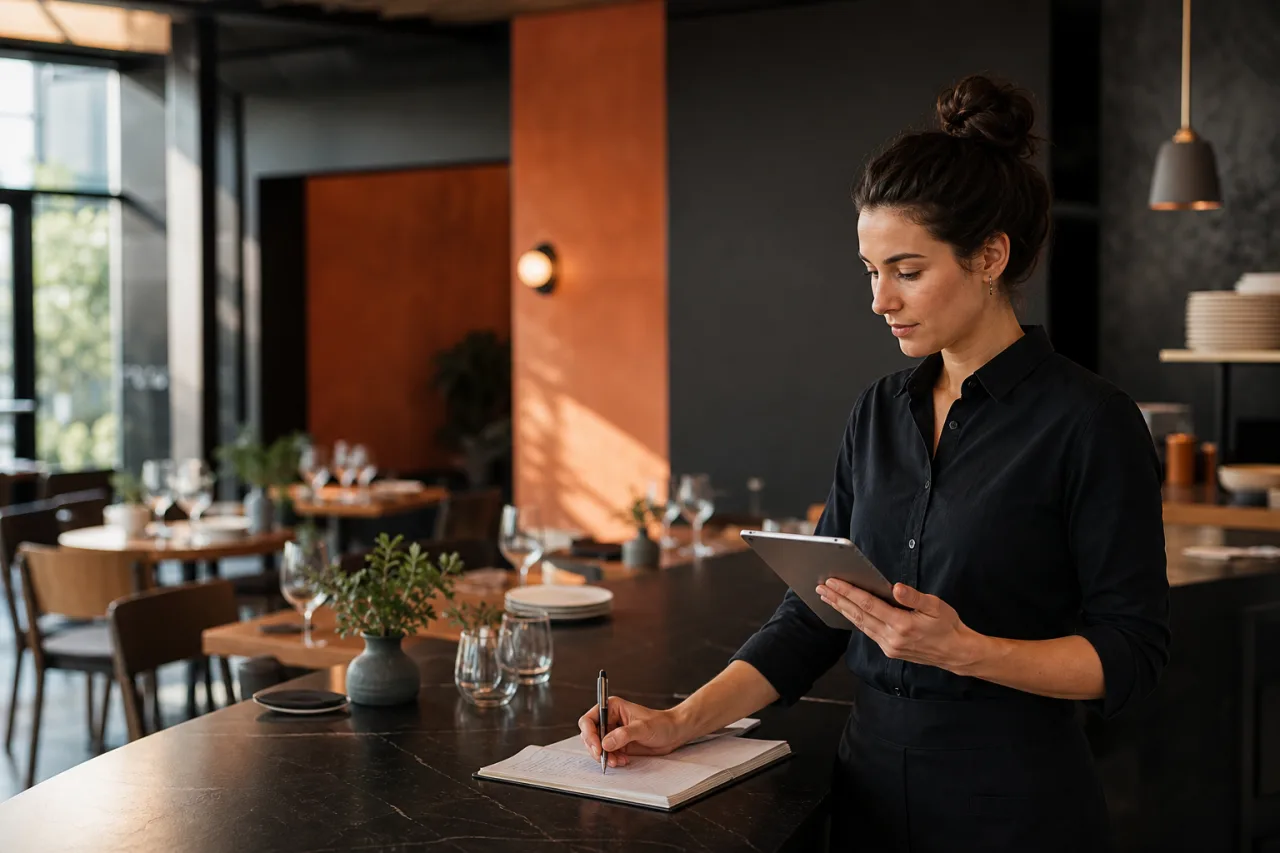
Well-planned booking slots are not about filling every minute. They help ensure that reservations fit the restaurant’s actual tables, areas and service rhythm. By considering party size, service style and layout, then checking availability before publishing bookings, you create a more dependable plan for both guests and the team.
Review your services, tables and availability before opening booking slots. Explore Restaurant reservations to manage bookings and table availability from a clear, accessible workspace.